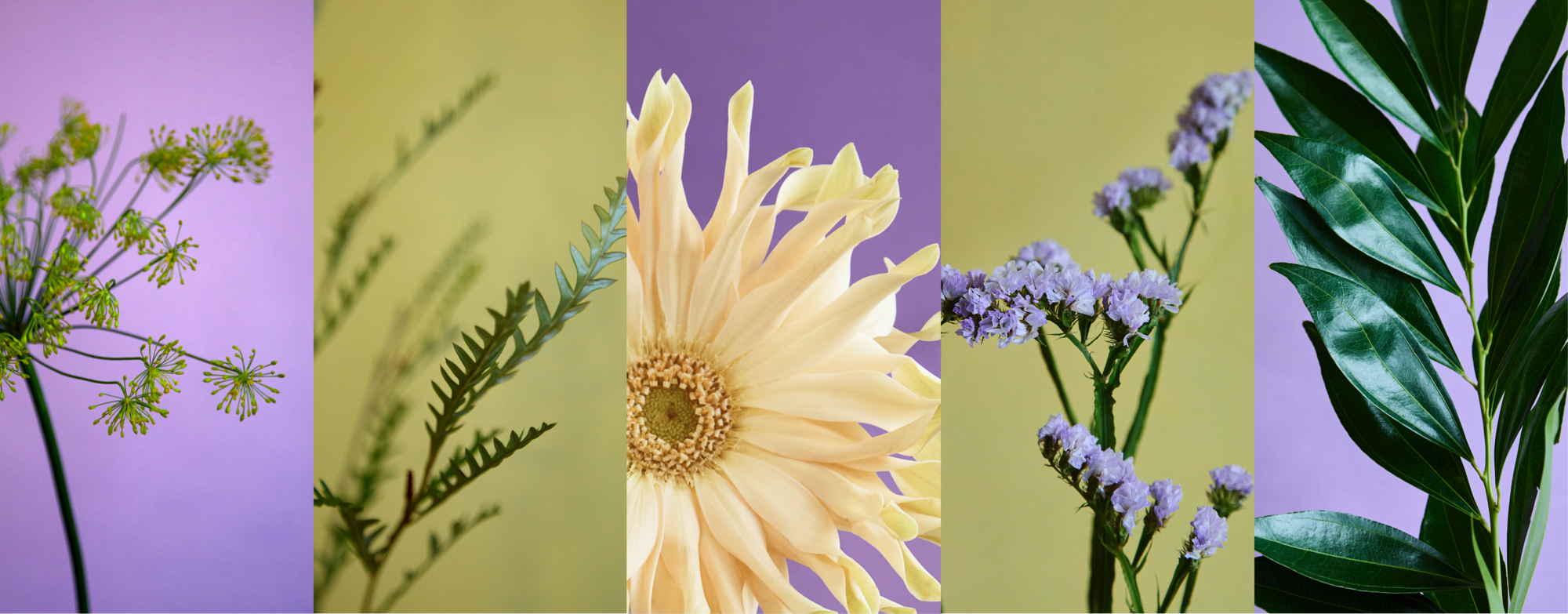

Weird & Wonderful Flower Varieties
This season, we’ve handpicked some truly eclectic stems to feature in our arrangements that simply deserve a spotlight on them. From otherworldly shapes and fantastic names to unexpected heroes, we wanted to introduce you to some of these fabulous flowers and share what makes them so special and why we adore them so much. So, let’s meet some of these strange, stunning, and unique stems of the season.

Pasta Carbonara - Gerbera
Yum! This deliciously named gerbera has got to be one of our absolute favourites this season. While its name may make your mouth water, you really shouldn’t eat it - leave it as your tablescape centrepiece while you serve the actual pasta dish.
What we love about this variety isn’t just its creamy, pastel-yellow shades, but the frilly, whimsical curls of its petals. It’s an absolute delight and guaranteed to steal the show in any floral arrangement. It also looks absolutely adorable on its own dotted around the house in bud vases.
Gerberas, which got their name from the German botanist Traugott Gerber, are some of the most popular cut flowers for arrangements due to their abundance of varieties, vibrant and diverse colours, and their excellent, long-lasting vase life. In addition, they’re usually available year-round and hold cheerful symbolism - from long-lasting happiness to loyalty, good fortune, and even child-like wonder! That means they’re not only perfect to brighten up your own home but also great if you want to send someone a “thank you” or “get well soon” message.
You can spot them in our Butter Swirls arrangement, keeping with the theme of delicious golden hues and spirals, or amidst a sunny selection of peachy and green stems in our Dappled Sunshine bunch.

Ivanhoe - Grevillea
No, with Ivanhoe we’re not referring to the lengthy romance novel by Sir Walter Scott, but to this incredible spider flower! Grevilleas are often called spider flowers because they feature otherworldly bloom clusters, called “inflorescence,” with numerous small flowers and long, slender filaments that extend out from the flower - just like the body of a spider, but a lot more colourful and less scary to a lot of people.
The Ivanhoe Grevillea flowers are actually less round and more elongated, which is why these are often referred to as “toothbrush-shaped,” but that doesn’t quite have the same ring to it, so we could stay in the natural world and say … alien caterpillar, perhaps?
Apart from their unique flower heads, their foliage is absolutely stunning, too, and that’s actually what we used in our Butter Swirls arrangement. It’s deep green and has sharply serrated, or toothed, leaves with a silvery-shimmering underside. It adds some edge and texture to any bunch, which we simply adore.

Anethum Graveolens - Dill
While you may expect dill more on a salmon-and-creamcheese-canapé or in your nan’s potato salad rather than in a flower arrangement, we’re here to convert you to a true dill aficionado.
This Anethum Graveolens variety looks nothing like what you may expect from the herb bushels you get in the supermarket. It comes in this marvellous shape, where finely divided leaves sit on a stem that unfurls in a circle and features clusters of small yellow flowers at the top. This botanic formation is called an “umbel,” by the way.
Its funky shape is the main reason we love it so much. Because it serves both flower and foliage function, it’s perfect to fill gaps in your arrangement while adding lush hues of green and yellow. Additionally, it has a lovely aromatic fragrance that it exudes from inside your vase wherever you place it in your house - grassy, herbaceous, and mildly spicy - with undertones of aniseed.
You can spot this brilliant variety in our Dappled Sunshine arrangement, where it adds to the warm, brimming orchard-vibe of the bunch.

Milka - Statice
Continuing the culinary theme, this variety of statice is called “Milka” thanks to its delicious bright lilac colour like the infamous German cow from the Milka chocolate. To be precise, the brand was actually founded by a Swiss chocolatier, but is produced in Germany - the nationality of the cow remains up for debate.
Enough of that, let’s bring this back to the beautiful flowering stem this is actually about. Statice is often also called “sea lavender” though it is not actually related to lavender or other species of that genus. This common name is a result of two of the flower’s characteristics: a) it is extremely salt-tolerant, meaning it can thrive in environments like coastal regions, beaches, and salt marshes, and b) many of the varieties feature similar colours to lavender, from lilac to deep purple.
What’s so lovely about Milka statice is that it retains its stunning bright lilac colour even when dried, making it perfect for dry arrangements or any sort of flower preservation. Hence statice is often called the “everlasting flower.” Interestingly, the vibrant, colourful and papery part of the stem is not technically the flower itself - in fact, there are tiny white flowers inside what is called the “calyx.”
You can find this beautiful stem in our Rhubarb Ribbons arrangement, where it adds a lovely bit of purple contrast to the composition of pink and green hues.

Laurel
Laurel is also known as bay leaves - aka that one random leaf you add to a stew or a soup because the recipe says so even though you have no idea what it actually does. (It’s a flavour enhancer, apparently.) Apart from its culinary use, however, laurel has a fascinating history of ascribed uses and symbolism.
It is often considered an ancient symbol of honour, victory, and prosperity, associated with adorning the heads of Roman emperors or Greek athletes. One of those Roman emperors, Tiberius, even wore wreaths of laurel on his head for protection during thunderstorms as it was believed laurel trees were immune to lightning. Other notable figures were also decked out with laurel wreaths as crowning headgear for achievements, like men of state or poets - that’s where the term poet laureate comes from.
In terms of its appearance, laurels are evergreen, ornamental shrubs, which feature shiny, dark green leaves that make for wonderfully extravagant foliage in floral arrangements. Their leathery appearance also adds some wonderful texture. We’ve used them in our Blueberry Sizzle bunch to add depth and contrast to the purple and pink hues of the flowers.
We hope you fall in love with these weird and wonderful stems as much as we have. They really do add that extra little something to any arrangement - and prove that sometimes the most unexpected heroes can really steal the show.
