
Peonies: Everything You Need To Know
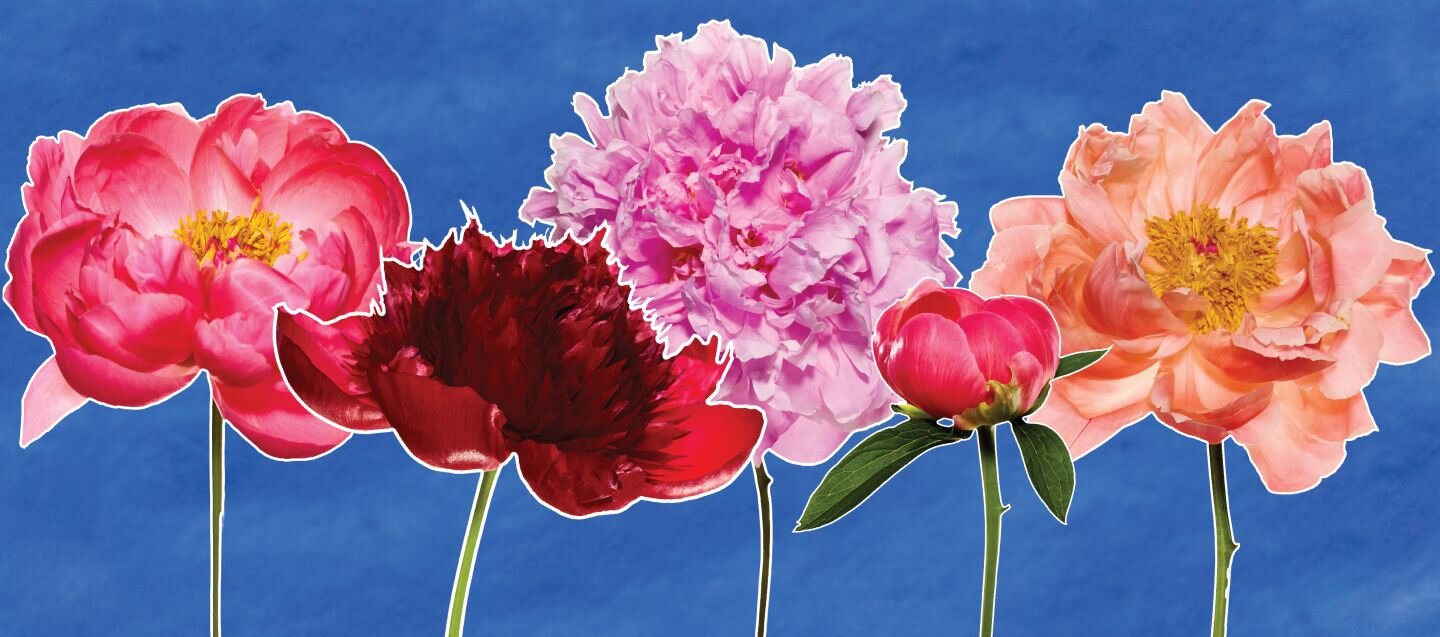
Exploding from tight, sculptural bud to layer upon layer of texture, colour, and frills, peonies don’t do subtle - and that’s exactly why we love them. It’s no wonder that their expressive bursts of beauty make peony season one of the most anticipated times in every flower lover’s calendar. If you’re keen to learn more about these showstopping stems, you’re in the right place.

What are peonies?
It doesn’t come as a surprise that the peony is one of the world’s most popular and well-loved flowers. Its name comes from a Greek myth about the physician to the gods, Paeon, who used the roots of peonies to cure Hades after he was wounded by an arrow.
As with all mythology and oral history there are always variants and multiple versions of a tale. Certain sources go on to describe how Paeon’s teacher, Asclepius, supposedly got in a jealous rage over Paeon’s talent, killed him, and Paeon was then transformed into the peony flower.
The genus Paeonia (the only genus in the family Paeoniaceae) is native to Asia, Europe, and North America. The forefathers of our modern-day peonies are so-called species peonies, or wild peonies. These include both woody types (tree peonies) and herbaceous types (like our cut-flower varieties). The American Peony Society estimates there are around 48 species in this group.
In China, peonies have been cultivated since the sixth century for both medicinal and ornamental purposes; the Chinese name ‘sho yu’ translates as ‘most beautiful’.
By the Japanese, peonies were cultivated and cross-bred in the nineteenth and twentieth centuries, creating herbaceous and tree peonies called ‘Itoh’ or ‘intersectional’ peonies. As for the varieties we know and love today, they come from the great horticulturist Victor Lemoine, who created the glorious ancestors of the peonies we put out in our boxes today back in 19th-century France.
The American Peony Society is the official, international authority for growers today to register their new cultivars and varieties and a quick look at their registry shows nearly 8,000 results. We’re truly spoilt for choice with peonies, but we’ve put together a little overview of some of the more commonly known types and our favourites.

What Are Some of our Favourite Peonies?
- Sarah Bernhardt: Probably the most recognisable type, this full-petalled pink peony has large flowers that bloom a little later in the season. Named after the famous French actress, it was first bred in 1906 by French breeder Monsieur Lemoine.
- Gardenia: Fragrant and white with a faint pink blush, this type is elegant and bright, reminiscent of a wedding dress.
- Coral Charm: This type unfurls beautifully into large blooms, shifting in colour from saturated pink hues to peachy orange and gradually to a softer blush shade.
- Red Charm: As red as a rose, this type stuns with a soft, fluffy centre.
- Belgravia: Opening in deep, glistening hues of red, this peony is a stunning double-flowered type with an abundance of bomb-shaped petals.
What Does a Peony Symbolise?
An arrangement of peonies makes for a stunning floral gift, not only for its grand beauty but also because of its symbolism. Depending on the cultural context and flower variety, peony meaning can be varied.
In China, especially during the Tang dynasty - a golden age of civilization -, the peony was especially adored and known as the “queen” or “king of flowers” and became a symbol of wealth and prosperity.
In Japan, the peony holds symbolic notions of honour, nobility, and romance, and is frequently featured in literature, art, and even tattoos. Its large, ruffled blooms are regarded as harbingers of good fortune and thus often used for celebrations and festive occasions.
As peonies were introduced into Europe later, their history of meaning here is less deep-rooted, but retains the general notion of happiness, prosperity, and romance. For newlyweds, they’ve long been regarded as an omen of good fortune and a happy marriage, for instance. Unsurprisingly, they’re one of the most popular wedding bouquet flowers and are used to celebrate 12 years of marriage. They’re also one of the two November birth flowers.
Growing Peonies

How to Plant Peonies
Find a sunny or partially shaded spot in your garden with well-draining soil. Aim to plant your peonies 2.5-5cm deep, taking care not to plant them too deep. Autumn is the best time of year to plant peonies, followed closely by spring.
How to Care for Peonies
Luckily, peonies are one of the easiest flowers to look after. They don’t require watering unless a very dry spell occurs, though some taller varieties may require plant supports as they grow. Deadheading your peonies after flowering can help optimise the plant’s growth and encourage fresh blooms.
When your peonies arrive, they may look a little bit small, but they will end up almost as big as your face, exploding with colourful petals. If you think they are a little too closed, pop their heads in a bowl of warm water and tap them on the table.
To learn more about keeping your peonies fresh in a vase, check out our Ultimate Guide to Peony Care.

When Do Peonies Bloom?
One of the things that makes peonies so special is how short their season is. Peony season in the UK only lasts from late April to early July. As for how long peonies last, most varieties have a slightly shorter lifespan of 5 to 7 days.
Order From Freddie’s Flowers’ Peonies List
If you’re already as excited for peony season as we are, we’ve got some good news for you. At Freddie’s we’ve got a whole collection of arrangements featuring peonies coming up, so you can fill every corner of your home with these stunning stems.
To make the most of their short-lived season, subscribe to Freddie’s Flowers for regular peony deliveries.
For some inspiration, check out our lookbook or take a look at our about us page to find out exactly how things work at Freddie’s Flowers.

