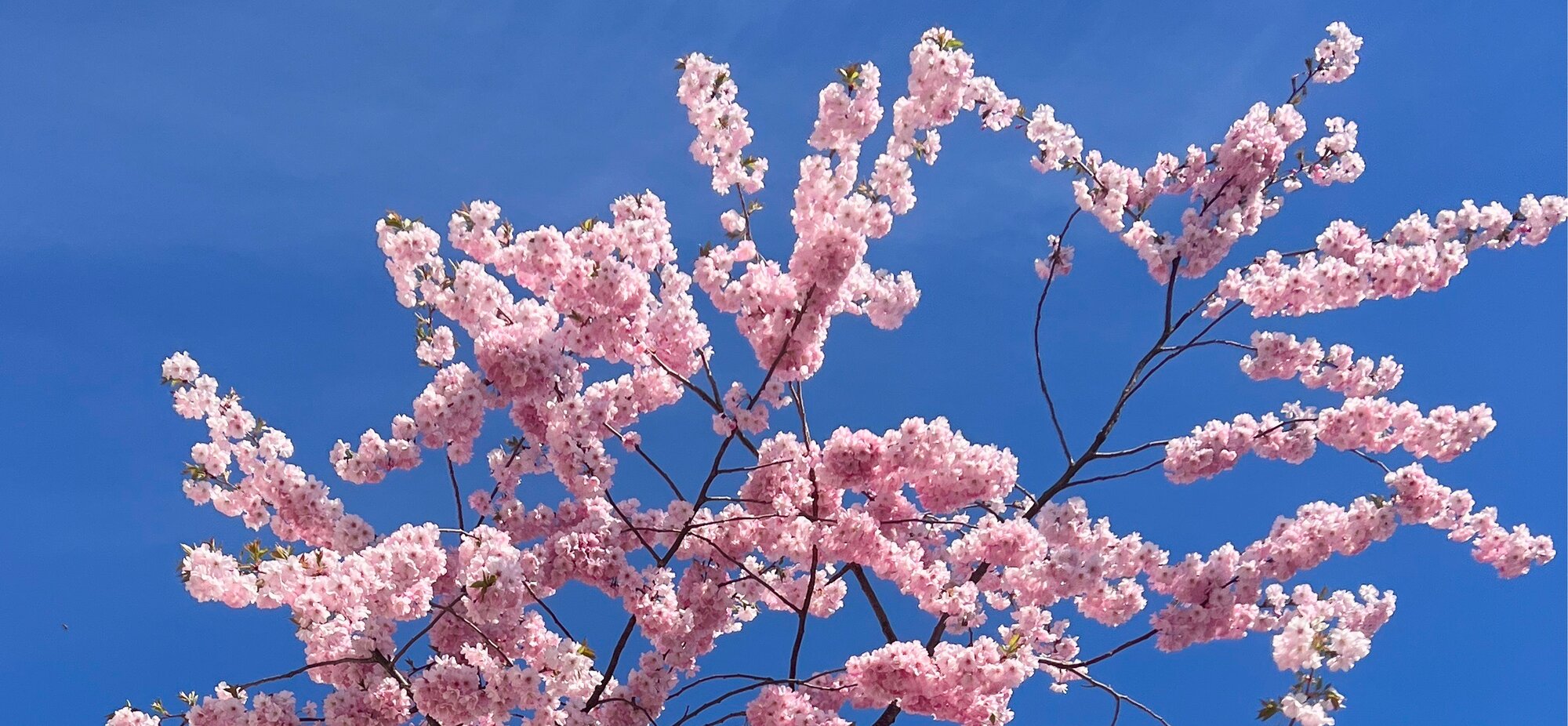

Our Favourite Cherry Blossom Spots
The delicate pink blossoms of cherry trees mark the arrival of spring. In Japanese culture, they signify a new season that carries a sense of renewal and rebirth. The trees have been cultivated in Japan for over a thousand years, but saw a global spread in cultivation throughout Europe and the US in the early 20th century. You can now see them flowering in gardens, parks, and along streets in many places in the UK.
Exact flowering times depend on the location, weather, and other environmental factors from as early as February to as late as March - luckily many of the royal parks, National Trust sites or known cherry blossom spots will have an online tracker or information on their website about the blooming progress, so do make sure to check in when you plan your day out.
In fact, as part of the Japan-UK Seasons of Culture, the Sakura Cherry Tree Project was founded, which since 2019 has planted over 7,700 cherry trees across the UK. You can use their tracker to find the nearest Sakura tree to your home here, but we’ve also compiled a neat little list here to share our personal favourites around the UK and in London with you.

A Few of Our Favourite Cherry Blossom Spots Across the UK
Edinburgh - The Meadows
Located in the south of the city, The Meadows is a large public park with long stretches of grassland and paths lined with white and pink cherry blossom trees - perfect for walks or picnics under the blossoming canopy.
Surrey - RHS Garden, Wisley
Offering 240 acres to explore, the Royal Horticultural Society Garden in Wisley is worth a day trip. You’ll be greeted by an avenue of more than 140 Yoshino cherry trees with white to pale pink blossoms. You can learn more about the different varieties of cherry trees on their website.
Lake District - Dora’s Field
Dora’s Field by Rydal Mount (Cumbria) was originally bought by romantic poet Wordsworth to build a house, which we think just adds to its serene charm! In addition to beautiful cherry blossoms, you’ll get the full spring feeling with rolling fields of daffodils and bluebells, too.
Derbyshire
Often cited as a lovely region for cherry blossom spotting, there’s many villages dotted with pink blossoms. We’ve compiled a few spots across Derbyshire here that deserve a special shoutout:
- Chatsworth House - often regarded as key blossom spot in Peak District
- The historic orchard at Hadwick Hall (National Trust) - features stunning cherry trees, alongside magnolias and an assortment of spring flowers
The Pleasure Gardens at Kedleston Hall (National Trust) - boasts a variety of blossoming trees, including cherry, apple, and horse chestnut trees.
Spotlight on Blossom Spots in London
Let’s zoom into the capital and have a look at some of our most-loved spots around London:
Battersea Park
Just a stone’s throw from our Freddie’s HQ, we’re lucky to have Battersea Park which has long had a cherry tree avenue. Around the millennium, some trees suffered from disease but thanks to the governor of the Nara province in Japan and the order of the monks responsible for the upkeep of the Peace Pagoda, forty trees were donated to be replanted. These belong to the pale pink Yoshino variety, which grows wild on the hills around Nara.
Kew Gardens
It is no surprise that London’s biggest botanical garden is home to a variety of different cherry tree species. Head there around mid-March to mid-April for some blossom-spotting, also including magnolias, bluebells, and daffodils for the full spring flower experience
Greenwich Park
Up the hill and past the observatory towards the rose garden lives a beautiful collection of cherry trees called “Cherry Tree Avenue,” a path boasting 28 cherry trees of the Prunus ‘Pink Perfection’ species with double rose-pink flowers, blossoming from late April to early May.
Regent’s Park
You can see Prunus ‘Sunset Boulevard’ trees lining footpaths, as well as Chester Road, featuring some trees planted from the Sakura project.
At Freddie’s, we are already so excited for this beautiful blossoming season. If you are, too, and want to get that feeling a little early, you can find cherry blossoms of the Prunus Rancho variety in our Rhubarb Ribbons arrangement.

Quickfire Cherry Blossom Facts
And lastly, please enjoy some interesting facts about cherry blossom trees, so you’re all in-the-know for the season!
Species
Cherry blossoms belong to the Prunus genus, which denotes flowering trees bearing stone fruits, including plum, peach, and almond trees. Many trees have been bred to produce more flowers and therefore those more ornamental types don’t necessarily bear fruit, while some produce small, bitter fruits that birds like as a snack
Petals
Not all cherry blossoms are the same colour; in fact, they feature a variety of rose-pink and even white hues. You can even eat the blossoms of some varieties, often used for teas, sweets, or baking - but don’t just go around plucking them off trees, please!
Fleeting Beauty
As mentioned above, the trees only blossom for a week or two, making this spectacle so sacred and special. But did you know that unfortunately the trees themselves also don’t have the longest lifespan? Typically, they will only live for 15-30 years with the exception of black cherry trees that can exist for anywhere up to 150 years.
The Oldest Tree
In Yamanashi’s Hokuto City, the famous Jindai-Zakura tree flowers every spring. The age of this legendary cherry blossom tree is estimated to be between 1,800-and 2,000 years old, making it the oldest of its kind in Japan, perhaps the world.


Posted on 13th February 2026