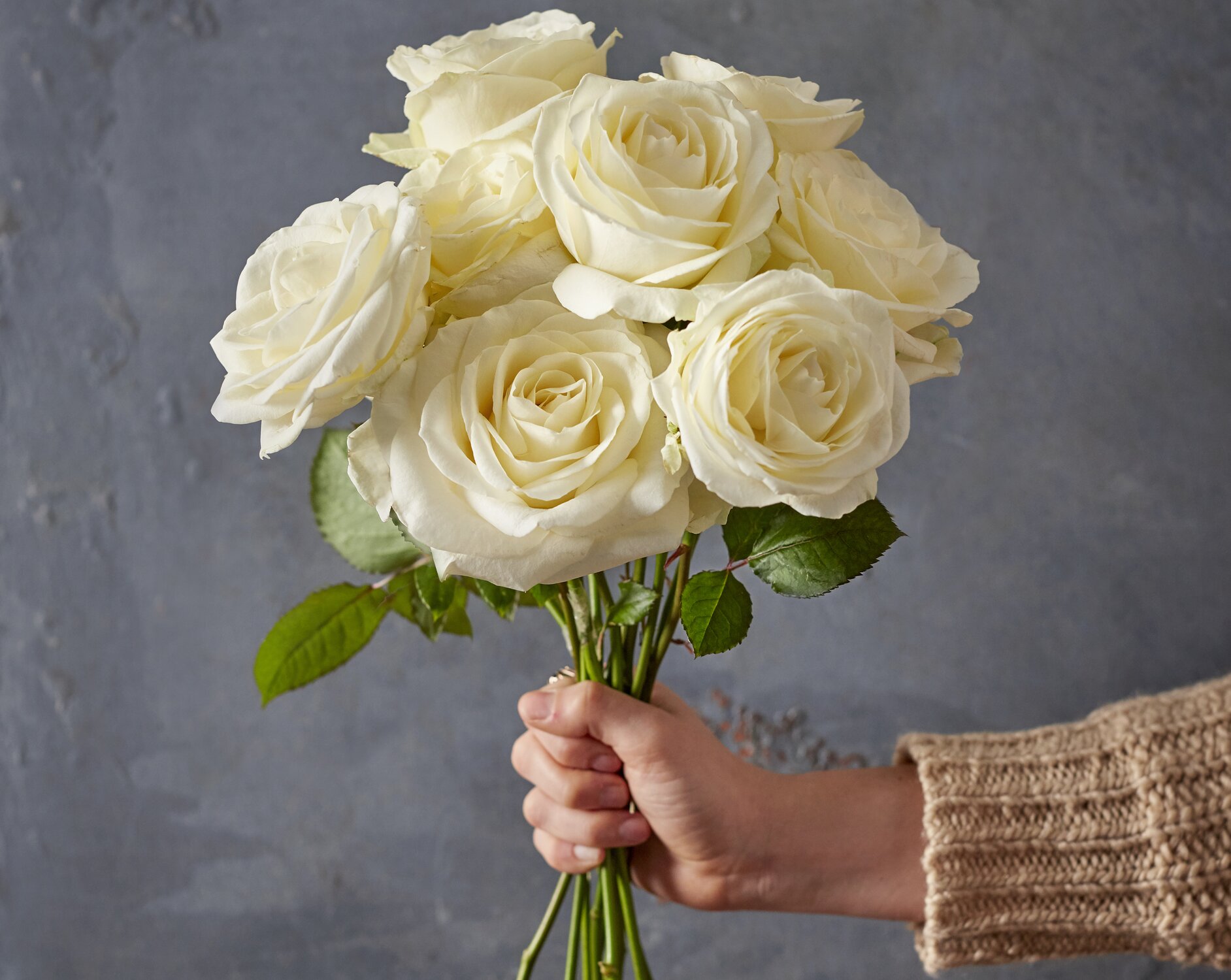

Rose Flowers: Everything You Need To Know
Everything You Need to Know About Roses
Roses are known as the classic flower of romance, adored by gifters and giftees for centuries. But what makes roses so romantic? What do they symbolise, and how can you keep your roses fresh?
At Freddie’s Flowers, we’ve popped on our rose-tinted spectacles to cover everything you need to know before ordering a rose delivery. We’ll cover the history of roses, their meaning, the types of roses, and when roses are in season.
Roses at a Glance
You’ve probably already been introduced to roses in one capacity or another, but allow us to help you get to know them a little better:
- Botanical Genus: Rosa, part of the Rosaceae family.
- Over 150 wild species of roses and thousands of cultivars exist.
- Roses fall into three official classes: Species (wild roses), Old Garden (historic roses), and Modern Roses.
- Roses’ UK garden season is roughly from June to September.
- They’re the June birth flower and England's national flower.

The History of Roses
Let’s dig a little deeper. Roses are famously the flower that you send when you just can’t find the words. But where does this idea come from?
Ancient Origins: Fossils and Early Cultivation
Roses have symbolised love and adoration for as long as we can trace, with archaeologists having discovered rose fossils dating back 35 million years. It is believed that ornamental roses, however, were first cultivated around 5000 years ago in China. The Persians are also known for rose cultivation in the 5th century BCE. Ancient Persians cultivated roses in iconic walled gardens and actually pioneered the production of rose water and essential oils.
Roses in Ancient Greece, Rome, and Egypt
While they’ve long been known for romance, with Cleopatra using them to seduce Mark Antony and the ancient Greeks associating them with the goddess Aphrodite, they also represent confidentiality.
The Latin expression “sub rosa” (literally, “under the rose”) means something told in secret; in ancient Rome, a wild rose was placed on the door of a room where confidential matters were discussed.
The War of the Roses
Roses are also England's national flower and have been since the 1500s. The Wars of the Roses, a civil war between the royal house of Lancaster (whose emblem was a red rose) and the royal house of York (whose emblem was a white rose), is also a key part of British history.

Are there Any Cultural or Symbolic Meanings Associated with Roses?
Above all, roses symbolise love, but throughout history they’ve also stood for secrecy, beauty, faith, power, and remembrance.
Roses Across Culture
- Ancient Rome: Romans saw roses as a symbol of secrecy (sub rosa).
- Christianity: Roses were associated with the Virgin Mary. In fact, the word rosary comes from the Latin word for rose garden.
- Persia and the Middle East: Roses symbolised beauty and the divine throughout Persian poetry.
- England: The national flower, worn on St George’s Day, represents unity and peace.
- Remembrance: Roses are commonly used in sympathy flowers and memorial flowers as symbols of love, respect, and deep emotion.
The Rose as a Birth Flower
As one of June's birth flowers, roses are synonymous with elegance and grace, and those born in June are said to be passionate individuals who value respect and honour. Pink roses symbolise happiness and admiration, while white roses suggest innocence and purity.

What Do Different Coloured Roses Mean?
What do yellow roses mean, and do pink roses carry a unique message? If you need a refresher on different colour rose meanings to make sure your special someone gets a bunch that means something and looks amazing, we’ve got you covered!
With the Victorian Language of Flowers, you can say something different with your roses using nothing more than natural colours. Here is our simple guide to all the key rose colours and their meanings.
- Red: Red roses are possibly the most popular symbol of love and passion in human history. They are universally synonymous with romance, evoking deep emotions and symbolising lifelong devotion.
- Orange: With their bright and eye-catching hue, orange roses are synonymous with energy and desire. In some cultures, their popping colour can also be the perfect way to congratulate someone on their success.
- Yellow: Capturing the sun's light, yellow roses are (to no surprise) symbolic of joy and happiness. Just looking at them will bring a smile. They also make the perfect gift thanks to their association with friendship.
- Green: Green is the colour of growth, and green roses have very similar connotations. Rebirth, abundance, renewal – they are the perfect way to celebrate a new beginning or fresh start.
- Lavender/Purple: For a dash of mystery, lavender/purple roses are intriguing. Associated with romance, mystique, and enchantment, they are the ideal flower for bringing wonder to someone’s life.
- Pink: Like their red cousins, pink roses symbolise love, but their lighter shade also represents sweet, gentle admiration that’s elegant and exciting.
- Peach: With their warm hue, peach roses deeply symbolise gratitude. Their inviting, eye-catching tone also conveys ideas of sincerity, modesty, and humility.
- White: With a rich history of ever-evolving meaning, white roses have long been associated with religion and royalty, but today they’re also symbolic of innocence, young love, and truth.
- Cream: Soft-hued and supremely elegant, cream roses are understandably symbolic of grace and charm. These roses are perfect for bringing class to any display.

What are the Different Types of Roses and How Do They Differ?
How to Plant Roses
There are actually thousands of rose varieties. Each of them can be categorised into just three main categories, however. The American Rose Society identifies these as:
- Species Roses (wild): Naturally occurring roses that typically have five petals and flower once a year, e.g. the dog rose, found in British hedgerows.
- Old Garden Roses: These varieties existed before 1867. They are known for fragrance and abundance, with many-petalled blooms that flower once a year.
- Modern Roses: Bred after 1867, modern roses are mostly repeat-flowering, with a wider range of colours and larger blooms.
What are the Most Popular Types of Roses used in Floral Arrangements?
Our expert florists know a thing or two about creating stunning rose arrangements. So, let us guide you through some of the most popular rose types used by florists at Freddie’s Flowers.
| Rose Type | Growth Habit | Bloom Style | Best For... |
| Standard Hybrid Tea | Single, upright focal stems with minimal side branching. | Classic spiral shape opening into a large, high-centred bloom. | Focal stems in structured, tall arrangement displays. |
| Spray Roses | Multi-stemmed branches with multiple smaller, delicate buds per stem. | Clusters of small, graceful cupped or open mini-blooms. | Adding soft volume, texture, and fill between larger blooms. |
| Sweet Avalanche Roses | Long-stemmed, upright, florist-standard rose. | Very large, dense petal count opening to reveal a blush centre with subtle green outer guard petals. | Romantic, subtle pastel centrepieces and multi-layered displays. |
| Garden / David Austin Style Roses | Bushy habit with thick, sturdy stems supporting heavy flower heads. | Deeply cupped, quartered, or rosette-shaped blooms packed with ruffled petals. | Statement floral displays with a vintage, luxury, or nostalgic feel. |
| Heart / Speciality Form Roses | Single, robust focal stem engineered for display stability. | Petals unfurl outwards in an unusual heart-shaped centre outline. | Romantic statement arrangements and Valentine's or anniversary specials. |
| Floribunda Roses | Cluster-flowering stems producing heavy, repeated bursts of bloom. | Medium-sized, semi-double or full blooms held in wide sprays. | Adding vibrant colour density and a looser, field-gathered aesthetic. |
| Grandiflora Roses | Tall, vigorous, erect growth that combines Hybrid Tea stem length with a cluster habit. | Large, elegant Hybrid Tea-like blooms borne individually or in small clusters. | Adding structural height and dramatic scale to tall arrangements. |
How to Arrange Roses
Roses pair well with almost anything! Although they add elegance to every arrangement, we like to switch up what we pair roses with in our flower subscription arrangements, depending on the season.
In the summer, we love pairing roses with delicate spring-like phlox and stocks. In autumn or winter, we blend them with blooms like eryngium (among others) and lush foliage.

Growing Roses
When are Roses in Season?
In the UK, garden roses are in season from late spring to early summer or autumn, usually June to September, with the biggest flush in June and many varieties flowering until the first frosts. Cut roses, however, are available all year long thanks to greenhouse growing and imports.
How to Plant Roses
In autumn or spring, plant your roses in a spot in the garden with healthy, well-draining soil. Plant them in a hole roughly twice the width of their roots and as deep as your shovel blade, then gently fill with a mix of soil and organic matter.
How to Care for Roses
In the garden, water your roses during dry spells and prune after their first winter to support healthy growth. For cut flowers, trim the stem at an angle and provide it with flower food. Remove any leaves that sit below the water line and keep them away from direct sunlight.
Order Roses from Freddie’s Flowers
Now that we’ve covered what makes roses so iconic and desirable, why not order flowers that are brimming with romance at Freddie’s Flowers?
Subscribe to Freddie’s Flowers today or gift flowers to your loved ones and bring a quality of love and passion to their homes.
For some inspiration, check out our lookbook or take a look at our about us page to find out exactly how things work at Freddie’s Flowers.
Frequently Asked Questions
When is the best time to prune roses
Pruning roses is best done during the late winter and early spring, from late February to early March.
How do I care for cut roses to make them last?
After a week in a vase, we recommend removing your roses from their arrangement, placing them in a Freddie’s bulb vase (available at checkout), and putting them in the fridge to give the display a new lease of life.

Posted on 27th May 2024
Up next...
Inspiration
Freddie's Guide to Gifting Flowers at Christmas
Wondering, ‘How can I choose the best Christmas bouquet for a gift?’ Discover a range of festive blooms to gift this winter season. Get inspiration today.